Suppliers submit products, attributes, media and offers through templates built on your category model. Your content team compares what each supplier sent, chooses the version that goes forward and passes complete cards to PIM for enrichment and publishing.
“Their professionalism and expertise were top-notch”
Supplier data arrives late, incomplete, and in inconsistent formats. Getting products into your catalog depends on how fast your content team can standardize files and fill the gaps.
We kick things off with an intro meeting to understand your goals, processes, catalog complexity, and tech setup
Link high-quality images, videos, and documents to products for richer content presentation across channels
Use AI-driven workflows to categorize, enrich, and validate product data, saving time and reducing errors
We kick things off with an intro meeting to understand your goals, processes, catalog complexity, and tech setup
Link high-quality images, videos, and documents to products for richer content presentation across channels
Use AI-driven workflows to categorize, enrich, and validate product data, saving time and reducing errors
Subheading: Give suppliers a structured way to submit product data, while your content team stays in control of quality, source selection, and what moves into PIM.
Reduce the time spent reformatting files and chasing missing data, so products can move into enrichment and publishing sooner.
Suppliers submit attributes using your category templates and validation rules, reducing the gaps your team has to fill.
See which supplier provided each value, compare submissions, and keep alternative versions available for review.
Use a consistent submission process across suppliers, so your team spends less time handling individual files as your network grows.
Suppliers work inside your structure from the first file, and your team sees every version that arrived.
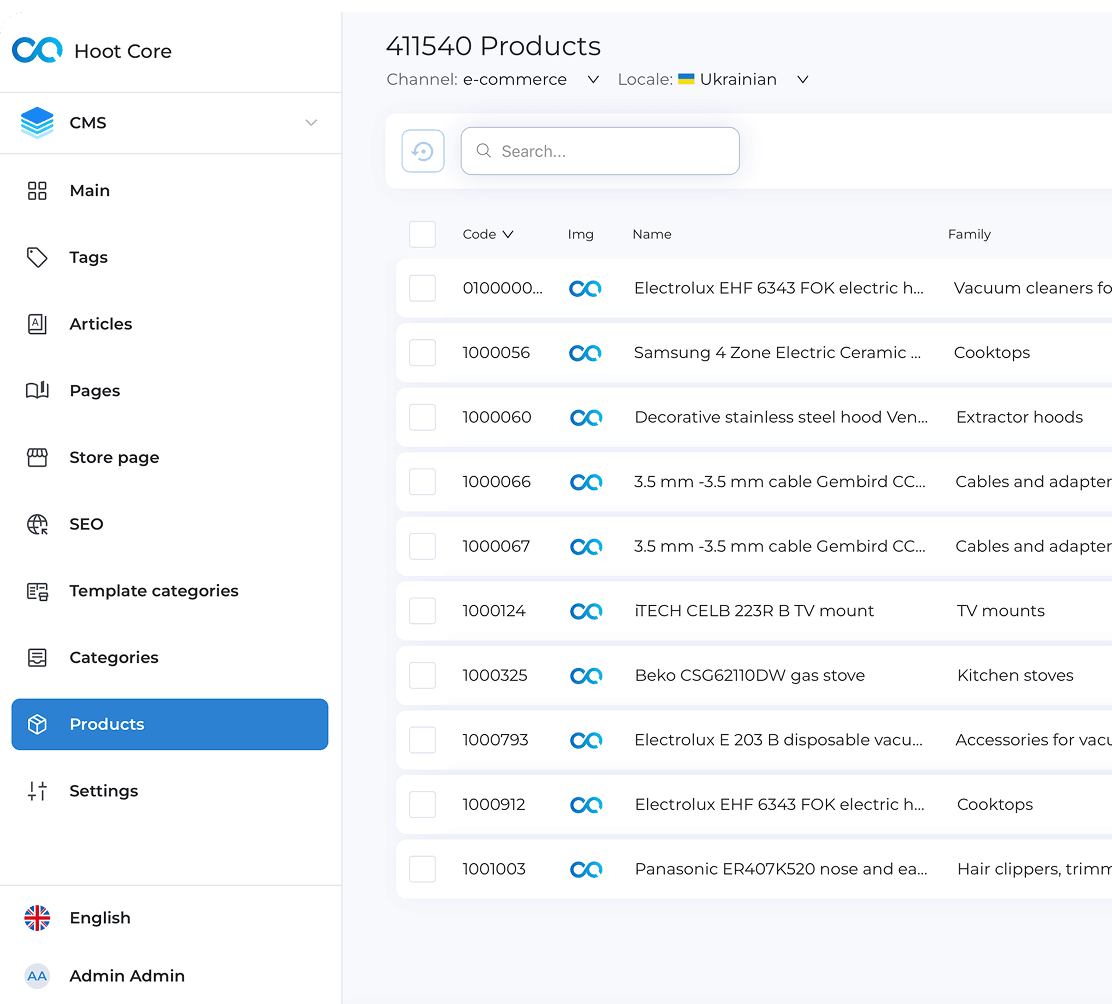
Invite a supplier by email and open only the categories they actually deliver. Everything they submit lands in your attribute structure, not in a mailbox.
A supplier either brings products your catalog does not have, or attaches their data to a product already listed. The second path fills out thin descriptions without adding a single new SKU.
Every product card shows what each supplier sent, side by side. Your content manager picks the version that goes forward.
Completeness is measured against what each channel and language actually requires, not against a single universal standard.
Supplier Portal collects and structures incoming data. PIM manages product content, the Offer Repository organizes supplier offers, and ERP supports assortment and logistics workflows.
Your number depends on how many suppliers work in the portal, how large your catalog is, and how many systems it writes to.

Learn how HootCore PIM stands out from leading product management tools

Your number depends on how many suppliers work in the portal, how large your catalog is, and how many systems it writes to.