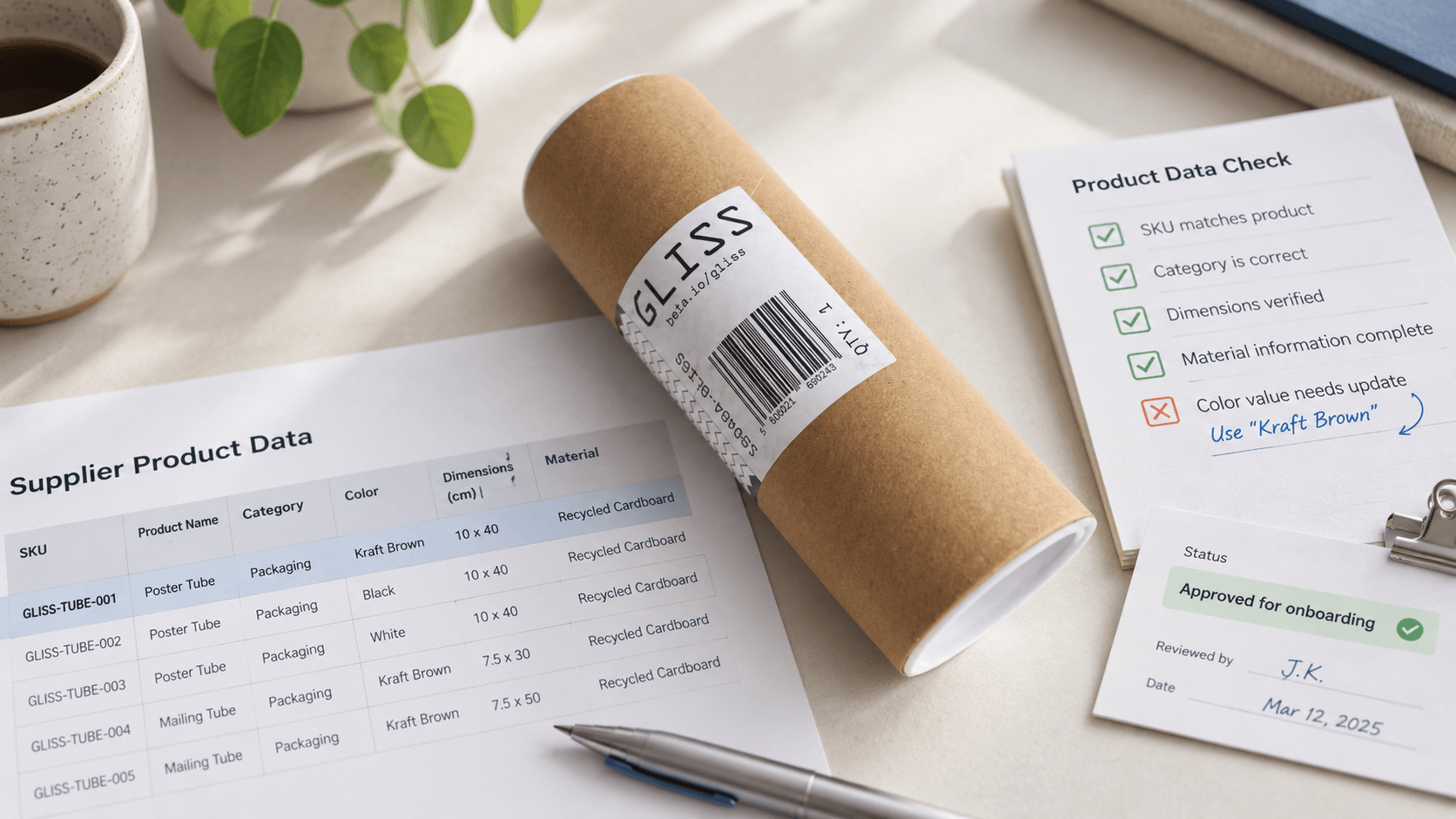
Collect product information from multiple suppliers through HootCore’s built-in Supplier Portal. Standardize specifications, enrich product content and prepare your catalog for your B2B website and connected marketplaces.

Every manufacturer uses different file formats and terminology, making supplier data onboarding harder as your catalog grows. HootCore turns that data into consistent product records for your catalog.
Product files and updates arrive through separate email threads, shared folders and spreadsheets, and your team has to find the latest version before any catalog work can start.
Manufacturers use different attribute names, units and value formats for similar products, and every file has to be mapped to your catalog structure before it can be used.
The same product often arrives from several suppliers under different names, and without matching by SKU or barcode your catalog ends up with several copies of one item.
Incomplete specifications, images or documents tend to surface late, when a product is already planned for launch on your B2B website.
Each new supplier file means another round of the same edits, even when the supplier changed only a few attributes.
Your B2B website, dealer portals and marketplaces expect different product content, and preparing each version by hand slows every assortment update.
Suppliers submit product data through the portal in the structure your catalog requires. Your team reviews, enriches and prepares it for publication in HootCore PIM.
Suppliers submit new products and updates in a dedicated portal, without access to your PIM and without scattered email attachments. Learn About Supplier Portal
Incoming products are matched against your catalog, and data from a second supplier attaches to the existing record instead of creating a copy.
For each product you see which suppliers sent data and choose the version to publish. Earlier versions stay in history.
Reusable no-code rules transform incoming attributes and values into the structure your catalog requires.
AI fills missing descriptions and attributes, and every generated value shows a confidence score and its source for review before publication.
Each record shows how complete it is for every market and sales channel, which keeps half-filled products out of your storefronts.
Less editing between the moment supplier information arrives and the moment a product is ready for customers.
Suppliers see which fields are required before they submit, and follow-ups focus only on what is still missing.
New supplier ranges move through an established workflow instead of becoming a separate project for every launch.
Identify duplicate records and missing product details before publication, so buyers can browse more complete, consistent product information.
Standardization rules and AI enrichment take over routine formatting, and content managers spend their time on review and exceptions.
Specifications and supporting documents stay organized, and sales managers find answers to buyer questions faster.
Version history keeps every supplier submission, and choosing a different source never deletes the previous one.
Product data onboarding for distributors in the situations your catalog team handles every week, with rule-based processing and approval before publication.
Suppliers submit products and updates through the portal, following the attributes and assets you mark as required.

Rule Engine maps incoming data to your catalog, HootCore matches duplicates by SKU and barcode, and AI enrichment fills gaps with a visible confidence score.

A product manager reviews each record and publishes approved products to your B2B website and marketplaces.

See how HootCore turns them into complete product cards.

Guides on organizing supplier information, improving product content and choosing software for catalog operations.

The number of suppliers, your catalog size and your sales channels help us show how HootCore would fit into your workflow.